
Ok, I tell students they are grouped with other students who have the same skill goals, but the truth is they have the same goals if they are reading at similar levels. What I don’t want to establish is the old-school Robins vs Bluebirds “Am I in the dumb group or the smart group?” perspective. So, I do not tell students their beginning instructional reading level. I do tell them a skill goal (your group is working on comprehension of details; your group is working on academic vocabulary; your group is working on adding to your word knowledge and fluency). Once students begin selecting books, they may notice that they are reading different Lexile levels though.
In practicality, my Reading Intervention classes are grouped according to instructional reading level, so that the group can read a book together that will be challenging enough to allow for growth in word knowledge. If groups are too diverse in Reading Intervention, the higher-level readers come to believe they don’t need the class in comparison to lower-level peers (even though none of them are reading proficiently at grade level in a Tier 2 Reading Intervention class, of course), and worse, the lowest-skilled readers experience the same defeat and avoidance cycles that brought them to this point.
By high school, novice-level readers need to realize that they’re not the only ones struggling, and homogenous groups provide that message and get students to be more willing to read with their peers despite their struggles. Thus, ability-based groups seem to work best for engagement, focused skill practice, and student motivation.
Throughout my Reading Intervention and English 10 classes, depending on the unit or skills, I use a variety of student grouping strategies, such as:
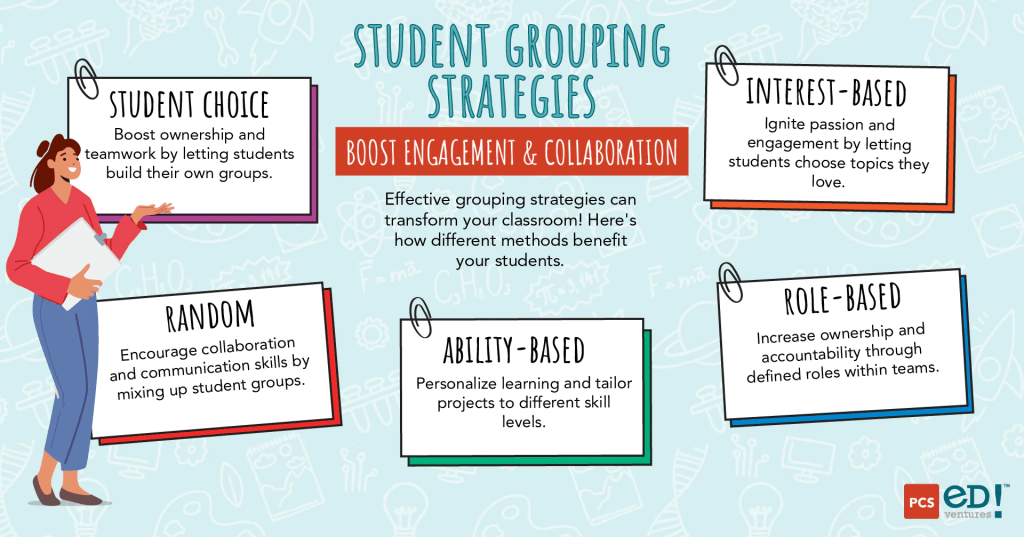
In larger classes in particular, I may have multiple groups reading at similar levels with similar goals; in that case, I move students around to promote the healthiest peer connections and hopefully even friendships.
This year, as I was experimenting with grouping students in a large (and challenging) 7th period class, I had a handful of students who are on the autism spectrum. Originally I combined them with other students who simply needed comprehension work, but immediately some of the “jocks” were actively making fun of students on the spectrum and students with speech impediments.
Because my district believes in funding “people over programs” as they tout, I have access to enough paraprofessional instructors or reading tutors to break even larger classes into groups of no more than 5 students per group. With a quick work-around as groups were still browsing and selecting books, I was able to regroup students to match not only their reading levels and skill needs, but also group according to similar interests and personality matches. The day after making this change, I heard one group of students enthusiastically discussing Pokémon and Legos without other students rolling their eyes. Watching that group of students unabashedly discuss their interests and connect with each other made the switching worthwhile.
It is now October, and my classes are routine in their daily skill practices, connecting with their peers, trusting their instructors, and already making progress in their reading abilities.
All the individual testing during the first few weeks of school, group rotations, skill modeling, discussing of behavior expectations, and even the first round of back-to-school influenza due to sitting directly at the table with the students: Worth it!

 OneTeacherOneBook
Leave a comment